.
Free delivery for orders over $150 except DG chemicals* & Rural areas.
$ All Prices are in New Zealand Dollars

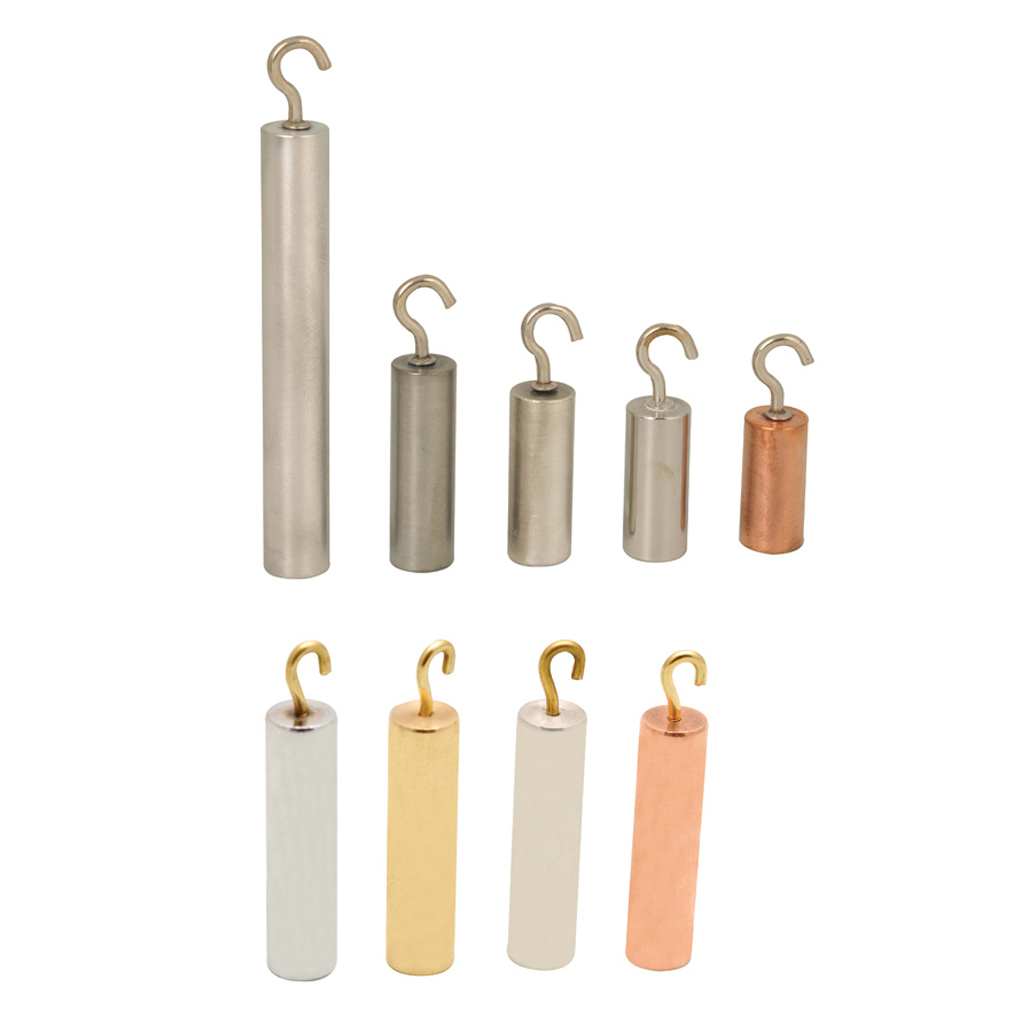
CYLINDER SETS [Metal Rods]: for Specific gravity experiments

Price range: $ 21.50 through $ 41.45 excl. GST

•  Two types of Metal Rod Cylinder Sets either with same mass or same size for specific gravity experiments.

SKU: CYLINDER-SETS-metal Categories: ,

Got a question?

We can answer any questions you have about CYLINDER SETS [Metal Rods]: for Specific gravity experiments

This field is for validation purposes and should be left unchanged.
CYLINDER SETS [Metal Rods]: for Specific gravity experiments

•  Two types of Metal Rod Cylinder Sets either with same mass or same size for specific gravity experiments.
(Wikipedia excerpt: ..."Relative density, also called specific gravity,[1][2] is a dimensionless quantity defined as the ratio of the density (mass of a unit volume) of a substance to the density of a given reference material. Specific gravity for solids and liquids is nearly always measured with respect to water at its densest (at 4°C (degrees Celsius) or 39.2°F); for gases, the reference is air at room temperature (20°C (degrees Celsius) or 68°F). The term "relative density" (abbreviated r.d. or RD) is preferred in SI, whereas the term "specific gravity" is gradually being abandoned.[3]

If a substance's relative density is less than 1 then it is less dense than the reference; if greater than 1 then it is denser than the reference. If the relative density is exactly 1 then the densities are equal; that is, equal volumes of the two substances have the same mass. If the reference material is water, then a substance with a relative density (or specific gravity) less than 1 will float in water. For example, an ice cube, with a relative density of about 0.91, will float. A substance with a relative density greater than 1 will sink...")

[Got more questions? Email us your query.] | [Home Page]