MICROSCOPE [Stereo]: SL-700, High quality, Senior level
Price range: $ 81.50 through $ 2,330.00 excl. GST
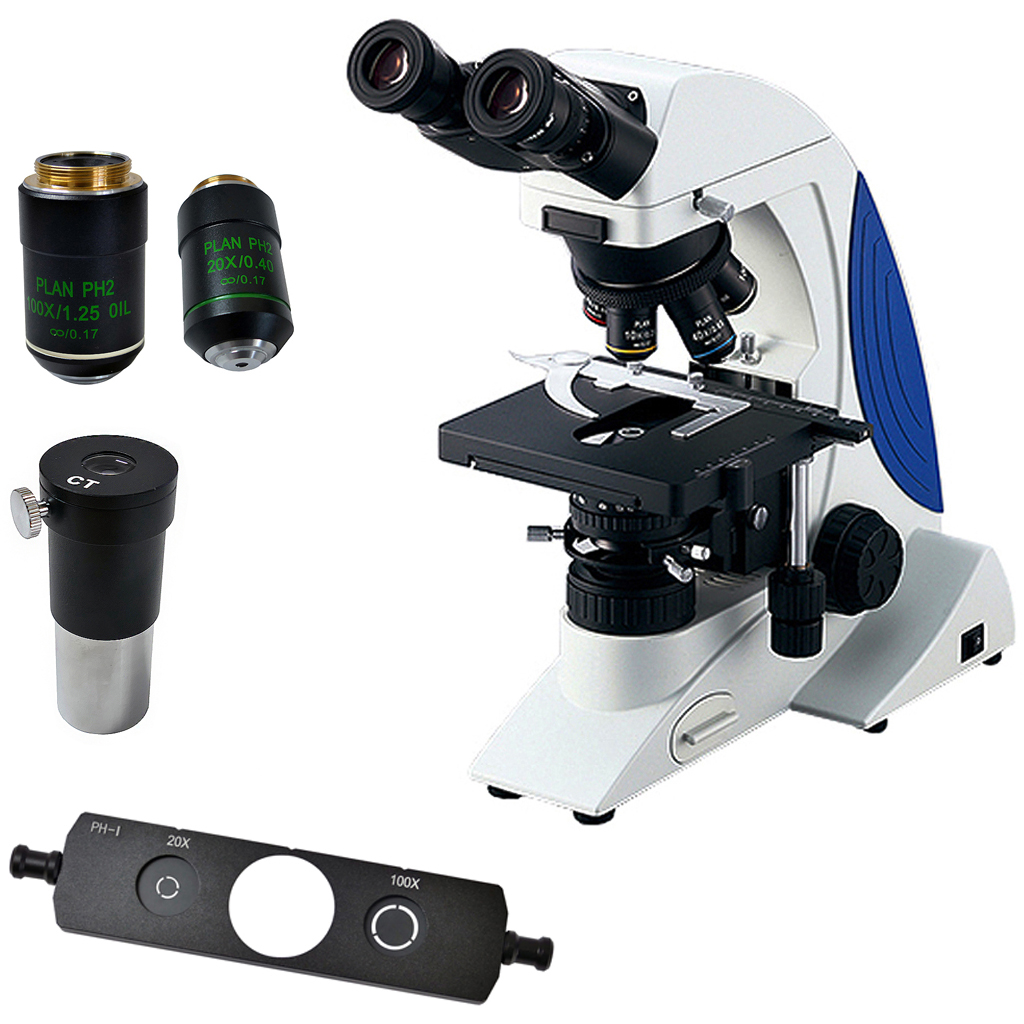
• This Microscope (Biological) is a universal infinity-corrected optical system, high precision instrument suitably ideal for senior level laboratory applications.
• Spare parts available.
• View Monocular Microscope or refer to View other Microscope related options.
• NOTE: *Light source NOT SUPPLIED so needs good natural light for use or a Microscope Lamp.
MICROSCOPE [Stereo]: SL-700, High quality, Senior level
• This Microscope (Biological) is a universal infinity-corrected optical system, high precision instrument suitably ideal for senior level laboratory applications.
• Features include :
– OPTICAL SYSTEM: UIS (universal infinity-corrected optical system)
– HEAD: Binocular head of Siedentopf type | 30° inclined | 360° rotatable | Light split rate 100%.
– EYEYPIECE: PL-10X high eye-point plan eyepiece | Field of view 18mm
– NOSEPIECE: Reverse quadruple nosepiece
– OBJECTIVE: Plan achromatic objective (4X | 10X | 40X | 100X)
– FOCUS: Coaxial coarse & fine focusing system with limit-stopper & tension adjustable. | Travel range: 28mm | Fine focusing precision:0.002mm
– STAGE: Low-position coaxial rectangular 150 x 140 mm mechanical stage | 76 x 50mm moving range | Paired clips.
– CONDENSER: Transmission critical illumination system | (Optional Koehler illumination).
– ILLUMINATOR: Built-in. 6V/20W halogen bulb | Pre-centred with continuous intensity control | 90~240V variable voltage.
– Spare parts available.
– View Monocular Microscope or refer to View other Microscope related options.
• NOTE: *Light source NOT SUPPLIED so needs good natural light for use or a Microscope Lamp.
(Wikipedia:.."...A microscope [M] (from Ancient Greek μικρός (mikrós) 'small' and σκοπέω (skopéō) 'to look (at); examine, inspect') is a laboratory instrument used to examine objects that are too small to be seen by the naked eye. Microscopy is the science of investigating small objects and structures using a microscope. Microscopic means being invisible to the eye unless aided by a [M] .
There are many types of [M] , and they may be grouped in different ways. One way is to describe the method an instrument uses to interact with a sample and produce images, either by sending a beam of light or electrons through a sample in its optical path, by detecting photon emissions from a sample, or by scanning across and a short distance from the surface of a sample using a probe. The most common [M] (and the first to be invented) is the optical [M] , which uses lenses to refract visible light that passed through a thinly sectioned sample to produce an observable image. Other major types of [M] are the fluorescence [M] , electron [M] (both the transmission electron [M] and the scanning electron [M] ) and various types of scanning probe [M] .[1]...")