.
Free delivery for orders over $150 except DG chemicals* & Rural areas.
$ All Prices are in New Zealand Dollars

INDUCTOR

$ 510.50 excl. GST

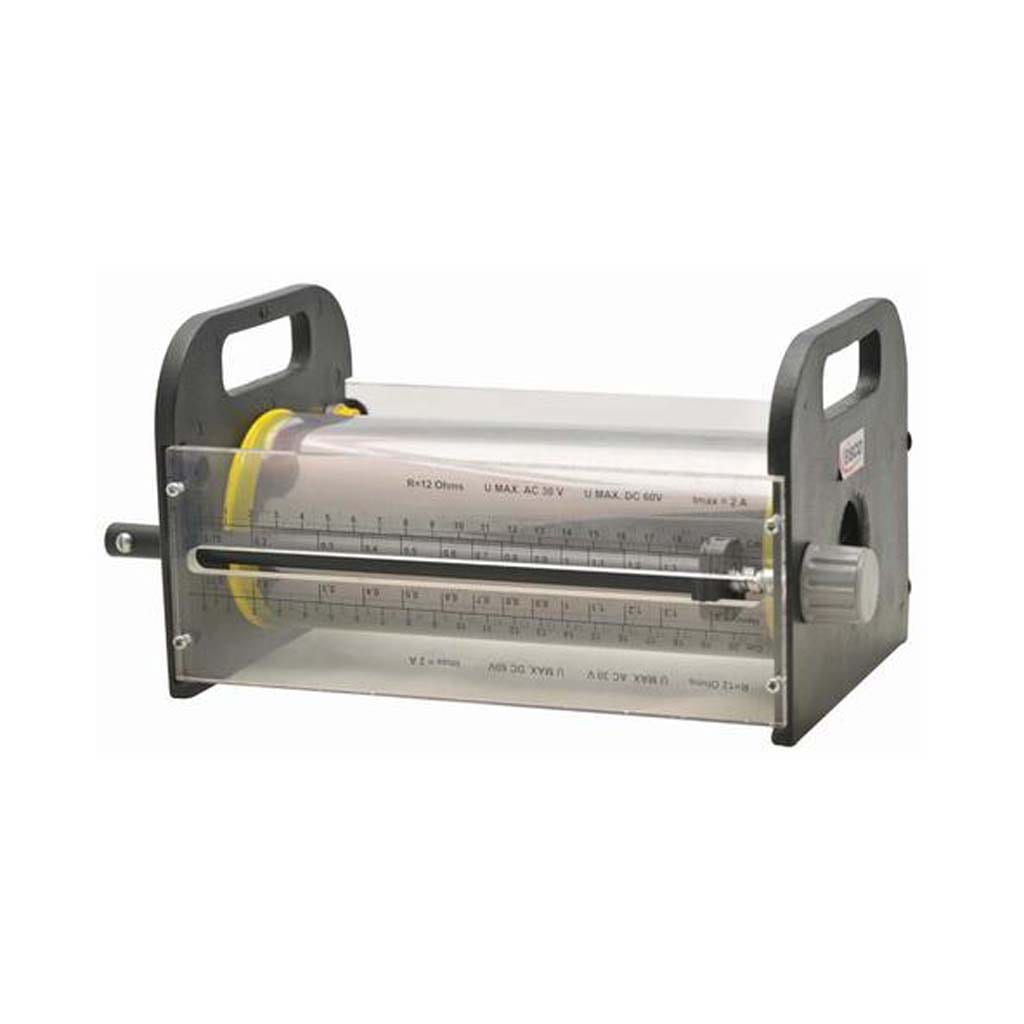
  • Enameled-wire winding with a 11.6 ohm resistance.
  • Dimensions (core inside) : 260 x 160 x 135mm.
  • Self induction coefficient up to 1.3 Henry enables precise measurements thanks to the screw adjustment.
  • Enameled-wire winding.
  • Resistivity : 0.0165 W/m.
  • Ø 25mm soft iron core.
  • Core’s displacement with quick advancement worm.
  • Self-induction coefficient : 0.15 to 1.3 H.
  • Core displacement’s scale mark.
  • Inductor has a carrying handle.
  • Electrical connection : 4mm safety sockets.
  • I max = 1.5 A (2A intermittently).
  • Safety operating voltages : 30 V (alternating current) or 60 V (direct current).
Out of stock. (can be backordered).

SKU: EO-PH0845VIC Categories: ,

Got a question?

We can answer any questions you have about INDUCTOR

This field is for validation purposes and should be left unchanged.
INDUCTOR
  • Enameled-wire winding with a 11.6 ohm resistance.
  • Dimensions (core inside) : 260 x 160 x 135mm.
  • Self induction coefficient up to 1.3 Henry enables precise measurements thanks to the screw adjustment.
  • Enameled-wire winding.
  • Resistivity : 0.0165 W/m.
  • Ø 25mm soft iron core.
  • Core's displacement with quick advancement worm.
  • Self-induction coefficient : 0.15 to 1.3 H.
  • Core displacement's scale mark.
  • Inductor has a carrying handle.
  • Electrical connection : 4mm safety sockets.
  • I max = 1.5 A (2A intermittently).
  • Safety operating voltages : 30 V (alternating current) or 60 V (direct current).
(Wikipedia excerpt: "...An inductor, also called a coil, choke, or reactor, is a passive two-terminal electrical component that stores energy in a magnetic field when an electric current flows through it.[1] An inductor typically consists of an insulated wire wound into a coil.

When the current flowing through the coil changes, the time-varying magnetic field induces an electromotive force (emf) (voltage) in the conductor, described by Faraday's law of induction. According to Lenz's law, the induced voltage has a polarity (direction) which opposes the change in current that created it. As a result, inductors oppose any changes in current through them.....")

[Got more questions? Email us your query.] | [Home Page]


Additional information

Item Range Size