
.
Free delivery for orders over $150 except DG chemicals* & Rural areas.
$ All Prices are in New Zealand Dollars

HYDRO ELECTRIC POWER STATION

$ 175.00 excl. GST

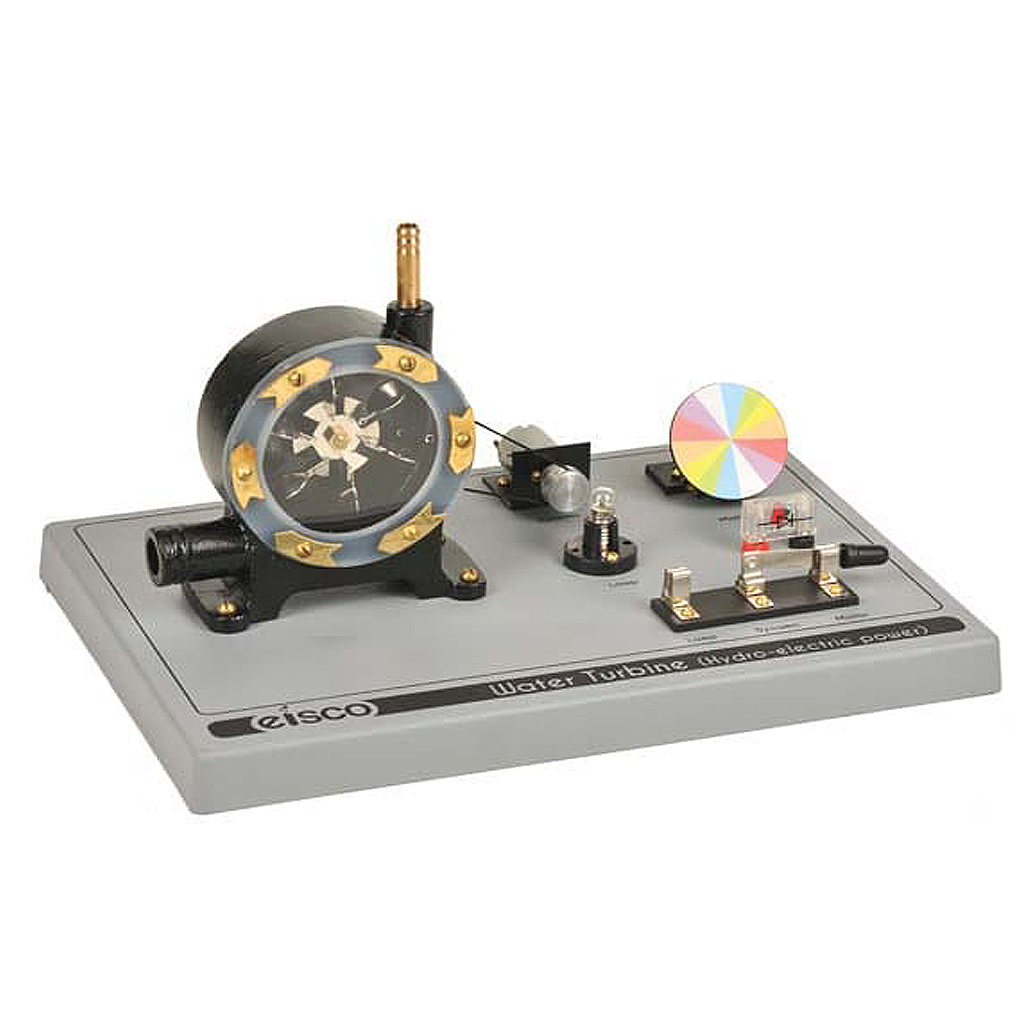
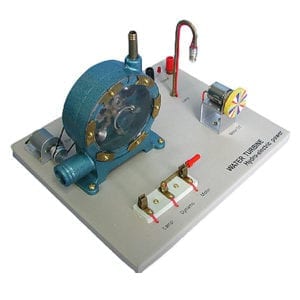
•  A well made working model of a Hydro Electric Power Station.
•  It is mounted on a plastic base 270 x 240mm and has a turbine which has a transparent cover so that it’s interior can be viewed.
•  Water is fed in an inlet tube which rotates the turbine blades and then passes out through an outlet tube.
•  Also mounted on the base is a generator which is belt driven from the turbine.
•  This powers either a torch bulb or a miniature Newton’s Colour Disc by switching the power with a knife switch.
In stock (can be backordered)

SKU: EO-PH0497A-N8 Categories: ,

Got a question?

We can answer any questions you have about HYDRO ELECTRIC POWER STATION

This field is for validation purposes and should be left unchanged.
HYDRO ELECTRIC POWER STATION

•  A well made working model of a Hydro Electric Power Station.
•  It is mounted on a plastic base 270 x 240mm and has a turbine which has a transparent cover so that it’s interior can be viewed.
•  Water is fed in an inlet tube which rotates the turbine blades and then passes out through an outlet tube.
•  Also mounted on the base is a generator which is belt driven from the turbine.
•  This powers either a torch bulb or a miniature Newton’s Colour Disc by switching the power with a knife switch.
(Wikipedia excerpt: ..."...Hydroelectricity, or hydroelectric power, is electricity generated from hydropower (water power). Hydropower supplies 15% of the world's electricity, almost 4,210 TWh in 2023,[1] which is more than all other renewable sources combined and also more than nuclear power.[2] Hydropower can provide large amounts of low-carbon electricity on demand, making it a key element for creating secure and clean electricity supply systems.[2] A hydroelectric power station that has a dam and reservoir is a flexible source, since the amount of electricity produced can be increased or decreased in seconds or minutes in response to varying electricity demand. Once a hydroelectric complex is constructed, it produces no direct waste, and almost always emits considerably less greenhouse gas than fossil fuel-powered energy plants.[3] However, when constructed in lowland rainforest areas, where part of the forest is inundated, substantial amounts of greenhouse gases may be emitted.[4] ....")

[Got more questions? Email us your query.] | [Home Page]