DISSECTING SEEKERS
$ 2.95 excl. GST
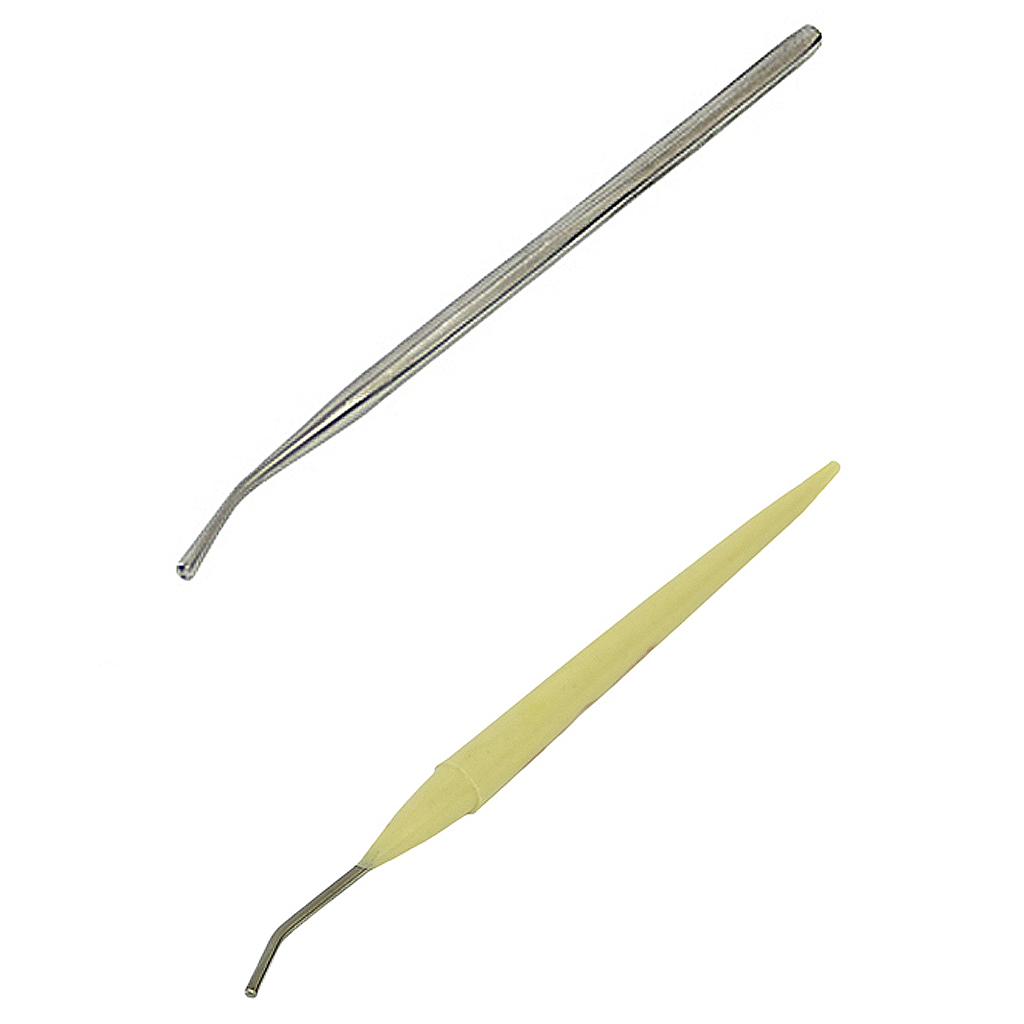
• A Dissecting Seeker (often called a Dissecting Probe) is an essential instrument in the laboratory for anatomy manipulation
• Two Dissecting Seekers available :
– 1) A 120mm long plastic handle covering to ensure another firm grip option with a 1.5mm semi-blunt flat wide tip.
– 2) A 120mm long stainless-steel seeker with a 2.5mm wide tip and a semi-blunt flat ended tip.
• These dissection tools are ideal to manipulate a specimen to provide an easy way to lift or separate embedded organ tissue, tracking vein and nerve pathways.
• Blunt probes allow you to move tissue easily and is very good for easy elevating, lifting and breaking through of loose connective tissue without tearing it minimizing damage to nearby structures.
• Sharp spear point type probes are able to tease apart for tissue access allowing controlled removal of connective tissue.
• (Note: *Intended for educational training use only and NOT for animal or human procedures.)
DISSECTING SEEKERS
• A Dissecting Seeker (often called a Dissecting Probe) is an essential instrument in the laboratory for anatomy manipulation
• Two Dissecting Seekers available :
- 1) A 120mm long plastic handle covering to ensure another firm grip option with a 1.5mm semi-blunt flat wide tip.
- 2) A 120mm long stainless-steel seeker with a 2.5mm wide tip and a semi-blunt flat ended tip.
• These dissection tools are ideal to manipulate a specimen to provide an easy way to lift or separate embedded organ tissue, tracking vein and nerve pathways.
• Blunt probes allow you to move tissue easily and is very good for easy elevating, lifting and breaking through of loose connective tissue without tearing it minimizing damage to nearby structures.
• Sharp spear point type probes are able to tease apart for tissue access allowing controlled removal of connective tissue.
• (Note: *Intended for educational training use only and NOT for animal or human procedures.)
(Wikipedia excerpt: ..."...Dissection (from Latin dissecare "to cut to pieces"; also called anatomization) is the dismembering of the body of a deceased animal or plant to study its anatomical structure. Autopsy is used in pathology and forensic medicine to determine the cause of death in humans. Less extensive dissection of plants and smaller animals preserved in a formaldehyde solution is typically carried out or demonstrated in biology and natural science classes in middle school and high school, while extensive dissections of cadavers of adults and children, both fresh and preserved are carried out by medical students in medical schools as a part of the teaching in subjects such as anatomy, pathology and forensic medicine. Consequently, dissection is typically conducted in a morgue or in an anatomy lab. ...")
[Got more questions? Email us your query.] | [Home Page]
Additional information
| Description | Dissecting Seeker / Plastic Handle / 120mm Long / Blunt Angled Tip, Dissecting Seeker / Stainless Steel / 120mm Long / Blunt Angled Tip |
|---|