.
Free delivery for orders over $150 except DG chemicals* & Rural areas.
$ All Prices are in New Zealand Dollars

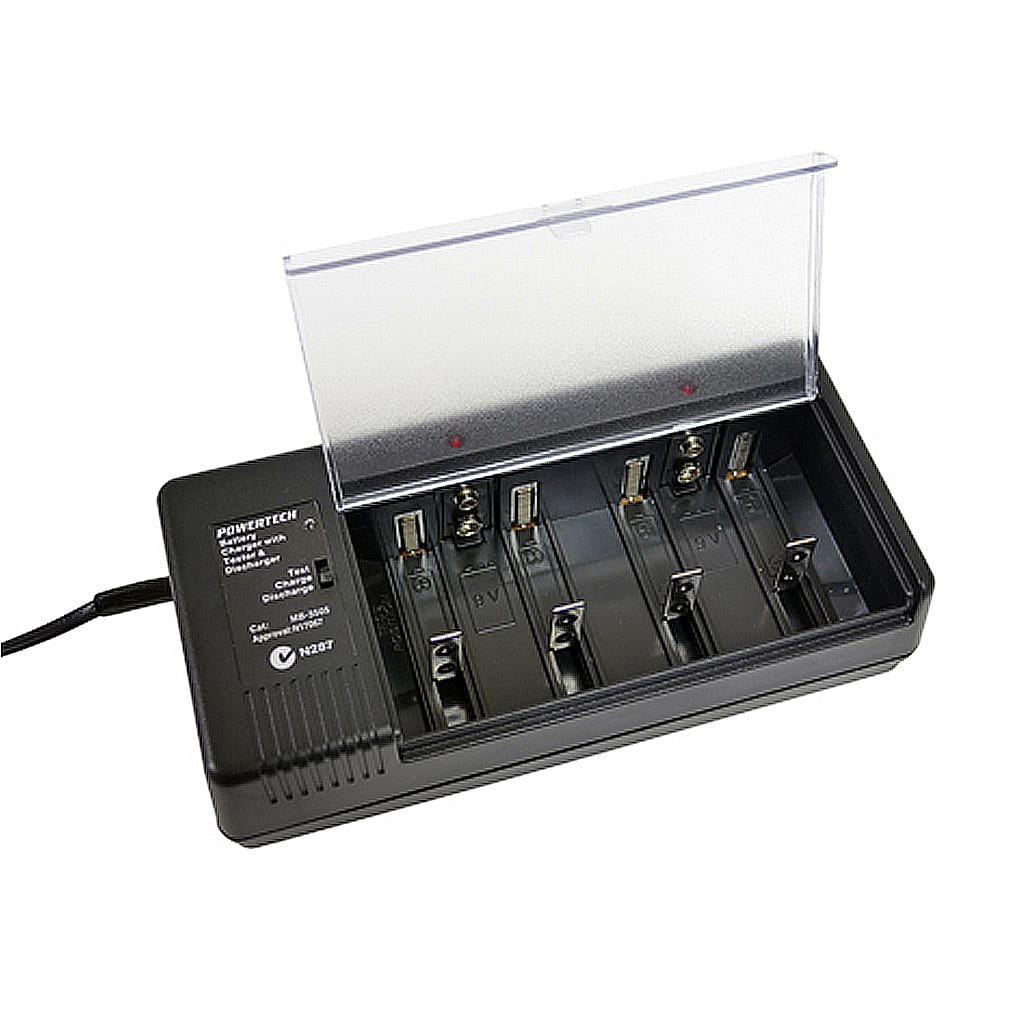
BATTERY CHARGER: for Nickle metal hydride batteries (AA, AAA, C, D, 9V)

$ 29.90 excl. GST

•  An affordable universal Battery Charger that will recharge AA, AAA, C , D and 9-volt Ni-MH/Ni-Cd (Nickel cadmium) batteries.
•  Charges in various configurations, ie. 2x 9-volt and 4x AA batteries simultaneously.
•  Voltage cuts off when fully charged ensuring long battery life.
•  Dimensions: 199 x 100 x 46mm.

Out of stock. (can be backordered).

SKU: EDMB3514 Categories: ,

Got a question?

We can answer any questions you have about BATTERY CHARGER: for Nickle metal hydride batteries (AA, AAA, C, D, 9V)

This field is for validation purposes and should be left unchanged.
BATTERY CHARGER: for Nickle metal hydride batteries (AA, AAA, C, D, 9V)

•  An affordable universal Battery Charger that will recharge AA, AAA, C , D and 9-volt Ni-MH/Ni-Cd (Nickel cadmium) batteries.
•  Charges in various configurations, ie. 2x 9-volt and 4x AA batteries simultaneously.
•  Voltage cuts off when fully charged ensuring long battery life.
•  Dimensions: 199 x 100 x 46mm.

(Wikipedia excerpt: .."...A battery charger, recharger, or simply charger,[1][2] is a device that stores energy in an electric battery by running current through it. The charging protocol—how much voltage and current, for how long and what to do when charging is complete—depends on the size and type of the battery being charged. Some battery types have high tolerance for overcharging after the battery has been fully charged and can be recharged by connection to a constant voltage source or a constant current source, depending on battery type.

Simple chargers of this type must be manually disconnected at the end of the charge cycle. Other battery types use a timer to cut off when charging should be complete. Other battery types cannot withstand over-charging, becoming damaged (reduced capacity, reduced lifetime), over heating or even exploding. The charger may have temperature or voltage sensing circuits and a microprocessor controller to safely adjust the charging current and voltage, determine the state of charge, and cut off at the end of charge. Chargers may elevate the output voltage proportionally with current to compensate for impedance in the wires.[3]...")

[Got more questions? Email us your query.] | [Home Page]

You may also like…